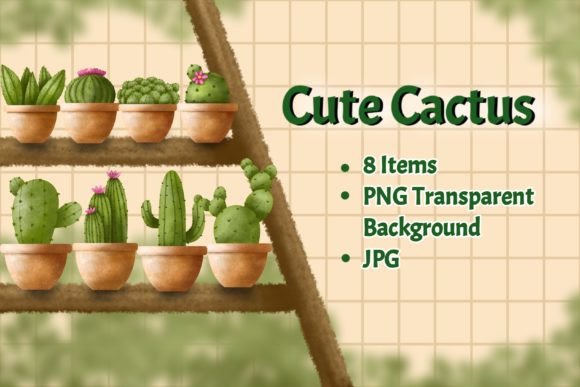
Cute Cactus
Cute Cactus is a versatile and charming design element that has found its way into the creative world of designers, artists, and hobbyists. This illustration, often characterized by its soft lines and playful aesthetic, can be used in a wide range of projects. Whether you're working on a personal project or a professional one, Cute Cactus offers a unique way to add personality and visual appeal.
The Cute Cactus Illustration comes in a zip folder containing 8 PNG transparent files and 8 JPG files. This format makes it easy to integrate into various digital and physical projects. The transparency of the PNG files allows for greater flexibility when placing the cactus on different backgrounds, while the JPG files are ideal for print and web use.
Where Cute Cactus Fits Into Broader Processes
Cute Cactus isn't just a decorative element—it's a tool that can fit seamlessly into multiple stages of a creative workflow. It can be used before, during, or after a project, depending on the needs of the task at hand. For instance, when designing a new product, Cute Cactus can serve as an inspiration or a placeholder. In the planning phase, it might help set a tone or theme for the project.
During the execution phase, Cute Cactus can be used to create mockups, templates, or even as part of a branding strategy. After the project is complete, it can be used for promotional materials, social media posts, or as a signature element in future work. Its adaptability makes it a valuable asset across different stages of a creative process.
Integration with Other Tools and Resources
One of the strengths of Cute Cactus is its compatibility with a variety of tools and platforms. Whether you're using graphic design software like Adobe Illustrator or Photoshop, or more accessible tools like Canva or Figma, the Cute Cactus files are designed to work well with these platforms. The transparent PNG files allow for easy layering over other elements, making them ideal for complex designs.
In addition to digital tools, Cute Cactus can also be printed onto various materials such as paper, fabric, and ceramics. This versatility means it can be used in both digital and physical formats, expanding its potential applications. For example, a small business owner could use Cute Cactus illustrations on stickers, mugs, or clothing items to create a cohesive brand identity.
Practical Implementation Tips
To get the most out of Cute Cactus, consider the following tips:
- Plan Your Use Case: Before incorporating Cute Cactus into your project, think about how it will fit into your overall design or workflow. Will it be a background element, a logo, or a decorative detail?
- Test Compatibility: Ensure that the file format you choose (PNG or JPG) works well with the platform or medium you're using. Transparent PNGs are particularly useful for digital designs.
- Organize Your Files: Keep your Cute Cactus files organized in a dedicated folder. This helps streamline your workflow and ensures you can easily access the right file when needed.
- Use for Multiple Projects: Since Cute Cactus is available in different formats, it can be reused across multiple projects. This saves time and effort in the long run.
- Combine with Other Elements: Don't limit yourself to using Cute Cactus alone. Combine it with other design elements to create more dynamic and engaging visuals.
Workflow Examples
Here are a few examples of how Cute Cactus can be integrated into different workflows:
1. Scrapbooking: When creating a scrapbook layout, Cute Cactus can be used as a border or as a decorative element in the corners. Its soft and friendly appearance adds a touch of whimsy to the page.
2. Card Design: For greeting cards or thank-you notes, Cute Cactus can be placed in the background or used as a focal point. It's especially popular in children's cards due to its cute and approachable style.
3. Sticker Creation: If you're making custom stickers, Cute Cactus can be used as a standalone design or combined with other elements. Its transparency makes it easy to apply to different surfaces.
4. Branding: For small businesses or entrepreneurs, Cute Cactus can be incorporated into logos, packaging, or marketing materials. It helps create a consistent and recognizable brand image.
Factors to Consider for Long-Term Use
When integrating Cute Cactus into your workflow, there are several factors to consider to ensure long-term usability and efficiency:
Preparation: Make sure you have the right tools and resources ready before starting a project involving Cute Cactus. This includes having the appropriate software, materials, and workspace.
Compatibility: Check that the file formats you're using are compatible with the tools and platforms you rely on. This ensures smooth integration and avoids technical issues.
Usability: Think about how easy it is to use Cute Cactus in your specific context. Does it require any special skills or knowledge? Can it be adapted to suit your needs?
Organization: Keeping your files organized is essential for efficient workflow. Label your files clearly and store them in a logical location.
Consistency: If you plan to use Cute Cactus repeatedly, maintain consistency in how you apply it across different projects. This helps build a cohesive visual identity.
Quality Control: Always check the quality of your final output. Ensure that the Cute Cactus elements are clear, properly aligned, and visually appealing.
Conclusion
Cute Cactus is more than just a simple illustration—it's a powerful design element that can enhance a wide range of creative projects. Whether you're a designer, marketer, educator, or hobbyist, understanding how to integrate Cute Cactus into your workflow can significantly improve the quality and impact of your work. By considering preparation, compatibility, usability, organization, efficiency, consistency, and quality control, you can ensure that Cute Cactus remains a valuable and versatile tool in your creative arsenal.